Most people treat their car like a tool. It gets you where you need to go, and that’s enough. Washing it feels optional — something you get around to eventually, when it’s really dirty.
I understand that thinking. But after seven years of working on cars professionally, I’ve come to see it differently.
A car isn’t just a machine. For most people, it’s one of the spaces where they spend the most time in their day. And that changes how I think about keeping it clean.
The Environment You Drive In Affects You More Than You’d Expect
Think about how many hours a week you spend inside your car. Commuting, running errands, sitting in traffic, driving on weekends. It adds up quickly.
The condition of that space affects how you feel in it. Not dramatically — it’s subtle. But it’s real.
A dusty dashboard, a windshield with a film of grime across it, a cabin that smells like last week — these things sit in the background of every drive. You don’t always notice them consciously, but they make the experience a little worse each time.
A clean car feels different. The cabin feels calmer. Visibility is better. Long drives are less tiring. It’s one of those small things that quietly improves your daily life without making a big fuss about it.
People Notice How You Take Care of Things
This one is worth saying plainly.
When someone sees your car, they’re not just seeing the car. They’re seeing how you look after the things you own.
An older car that’s clean and well-maintained tends to leave a better impression than a newer one that’s clearly been neglected. Age matters less than condition. Most people pick up on this instinctively, even if they don’t think about it consciously.
A clean car doesn’t communicate wealth. It communicates care. Those are different things, and the second one is something anyone can do.
Some Contamination Causes Permanent Damage — and It Happens Faster Than You’d Think
Here’s something I see regularly in my work: damage that could have been avoided completely if the car had been washed a little more often.
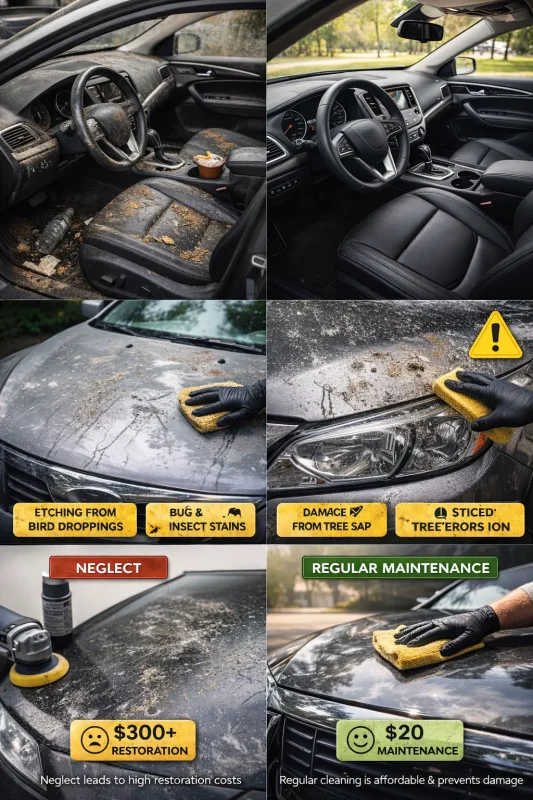
Certain things that land on your paint aren’t just dirty — they’re actively corrosive. Bird droppings are acidic and can etch through clear coat in a matter of days, especially in warm weather. Bug splatter does the same thing. Tree sap, industrial fallout, and road tar bond to the surface over time and become increasingly difficult to remove without causing further damage.
The frustrating part is that this contamination often doesn’t look serious at first. It just looks like a dirty spot. By the time the damage becomes obvious, it’s already done.
Dark-colored cars show this faster — but it happens on all paint colors. The clear coat doesn’t care what shade the car is.
Regular Washing Is Actually the Cheaper Option
A lot of people think frequent car washing is an unnecessary expense. In reality, it’s usually the cheaper choice when you look at the full picture.
Light surface contamination removed during a regular wash costs almost nothing to deal with. The same contamination left on the paint for weeks or months — or years — can turn into paint correction work, polishing, or even panel respray. Those aren’t cheap.
I’ve done enough restoration work to say with confidence: preventive maintenance is almost always cheaper than fixing damage that didn’t need to happen. The math isn’t complicated.
You Don’t Need to Go Overboard
I’m not suggesting everyone needs a full professional detail every month. That’s not realistic for most people, and it’s not necessary.
What matters is consistency. A basic wash done regularly — with reasonable technique and reasonable tools — does far more for a car than occasional deep cleaning separated by months of neglect.
You don’t need expensive equipment. You don’t need to spend hours on it. You just need a routine that you actually stick to. The cars that hold up best over time usually aren’t the ones that got the most intensive treatment — they’re the ones that got steady, consistent care.
The Bigger Picture
Keeping a car clean protects the paint, maintains resale value, and makes every drive a slightly better experience. None of these are dramatic benefits. But they compound over time in the same way that small neglect compounds into bigger problems.
A clean car isn’t about vanity. It’s just good maintenance.
Questions about your specific situation? Drop a comment below — happy to help.