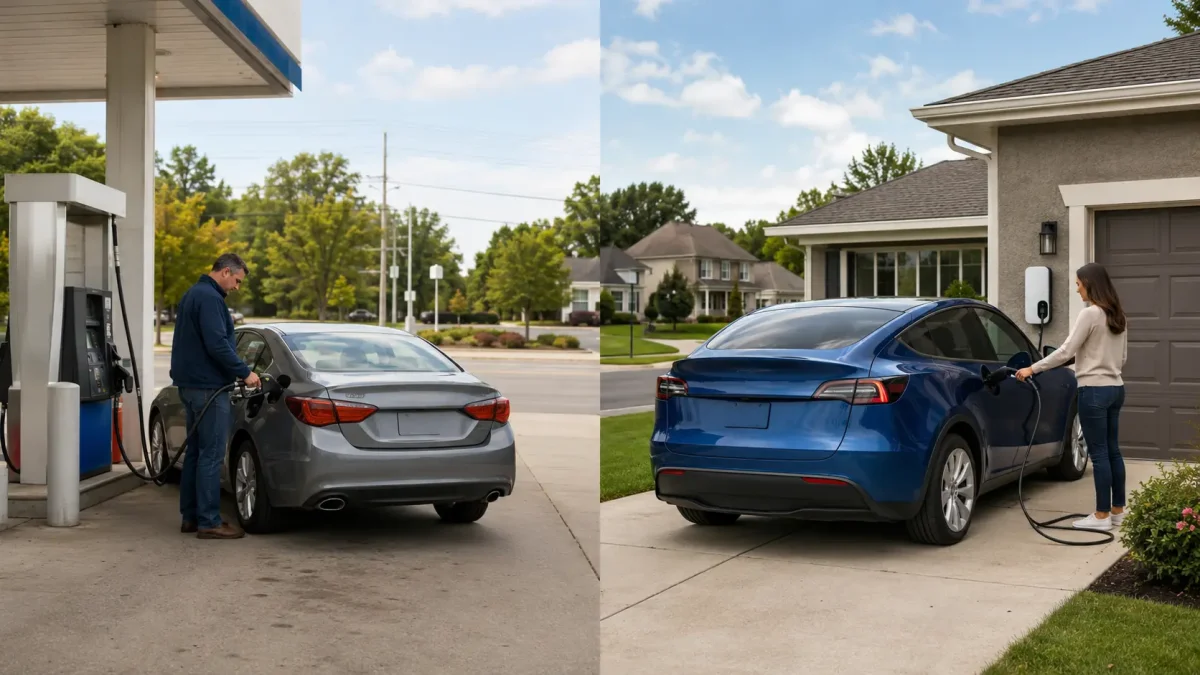
Buying a car in America used to feel a little simpler. For many people, the main question was whether to buy a sedan, an SUV, or a pickup truck. Maybe you compared gas mileage, insurance, and monthly payments.
Now the decision feels more complicated.
Hybrid cars are everywhere. Electric vehicles are getting better every year. Gas prices still matter. Charging access matters. And for many buyers, the real question is not just which car is better, but which one makes more sense for their daily life.
I do not think there is one perfect answer for everyone. But if I were looking at the market right now, I would think about it this way.
For a used car, a hybrid often makes more sense.
For a new car, an electric vehicle can be the smarter long-term choice if your charging situation works.
Why the Decision Is Different in America
America is a car-dependent country for most people. Unless you live in a city with strong public transportation, a car is not optional. It is part of daily life.
Commuting, grocery shopping, school runs, weekend trips, and long highway drives all add up quickly. Some people drive 30 to 50 miles a day without thinking much about it.
That is why fuel cost, reliability, and convenience matter so much.
A car that looks good on paper may not feel practical if it does not fit your real driving routine. This is especially true when comparing hybrids and electric vehicles.
Why Hybrid Cars Still Make Sense
The biggest strength of a hybrid car is that it feels familiar.
You do not need to plan around charging stations. You do not need to install a home charger. You simply fill it with gas like a regular car, but get better fuel economy than a traditional gasoline vehicle.
For many American drivers, that balance is attractive.
A hybrid works especially well if you drive in mixed conditions. City traffic, suburban roads, and occasional highway driving are where many hybrids perform well. The electric motor helps reduce fuel use in stop-and-go traffic, while the gasoline engine gives you the range and flexibility people are already used to.
Models like the Toyota Prius, Toyota Camry Hybrid, Toyota RAV4 Hybrid, and Hyundai Tucson Hybrid have become popular for a reason. They are practical, efficient, and easy to live with.
If You Are Buying Used, Hybrid Feels Safer
If I were buying a used car right now, I would personally feel more comfortable choosing a hybrid over a used electric vehicle.
The reason is not that used EVs are bad. Some of them can be great deals. But for the average buyer, battery condition can be hard to judge.
With a used EV, you have to think about battery health, charging history, remaining warranty, range loss, and local charging access. Those things are not always easy to understand just from looking at mileage.
A used hybrid is usually easier to evaluate. The technology has been around longer, and many hybrid models have a strong reliability record. The ownership experience is also closer to a regular gasoline car, which makes it less risky for people who do not want to change their routine too much.
For someone buying used and trying to avoid surprises, a hybrid can feel like the more stable choice.
If You Are Buying New, Electric Starts to Look Better
A new electric vehicle is a different story.
If you are buying new, you get the full battery warranty, the latest technology, better range, faster charging, and fewer unknowns. That makes the decision much easier than buying a used EV.
The biggest factor is charging.
If you can charge at home, an EV becomes much more practical. For example, if you drive 40 miles a day and plug in at night, the car is ready again the next morning. You may rarely need to visit a public charger except on longer trips.
That convenience is easy to underestimate.
There are also fewer routine maintenance items. No oil changes. Fewer engine-related parts. Less mechanical complexity in some areas. Over several years, that can make ownership feel simpler.
Of course, electric vehicles are not perfect for everyone. If you live in an apartment with no reliable charging, travel long distances often, or live in a very cold area, you need to think more carefully. But for a new car buyer with good charging access, an EV can be a very reasonable choice.
The Real Question Is Not Technology
Many people compare hybrid and electric cars as if one technology has to win.
I do not think that is the right way to look at it.
The better question is this. Which one fits your life better?
If you drive long distances and do not have easy charging, a hybrid may be the easier choice. If you mostly drive locally and can charge at home, an electric car may make more sense. If you are buying used, a hybrid may feel safer. If you are buying new and keeping the car for years, an EV becomes more attractive.
The right answer depends on your situation, not just the badge on the car.
My Honest Take
If I were buying a used car in America right now, I would lean toward a hybrid.
It offers better fuel economy than a regular gas car, lower risk than many used EVs, and a familiar ownership experience. For a practical daily driver, that is hard to ignore.
If I were buying a brand-new car, I would seriously consider an electric vehicle, but only if I had a reliable place to charge it. Home charging changes everything. Without that, the convenience advantage of an EV becomes much weaker.
So my answer is simple.
Used car buyers should strongly consider hybrid cars.
New car buyers should look seriously at electric vehicles if charging fits their lifestyle.
The smartest choice is not always the newest technology. It is the car that fits your budget, your driving habits, and your daily routine without creating extra stress.