To be honest, I always thought I’d eventually build my own shop.
Not right away—but after I had learned enough, after I had put in the time. I assumed it would happen naturally at some point.
But before that, I focused on one thing:
getting better at the work itself.
Polishing paint. Refining process.
Understanding how small differences could completely change a result.
Like most people in this field, I started with what I had, where I could.
Seven years passed like that.
Now, I feel like I’ve reached a point where I can run things on my own—
not just based on confidence, but on experience.
I’ve learned efficiency.
Worked on different types of cars.
Dealt with all kinds of customers.
And most importantly, I understand how this business actually works.
At some point, that led to a simple thought:
I don’t just want to do the work anymore.
I want to shape how it’s done.
The Difference Between Doing and Building
Detailing is no longer just a technical skill to me.
It’s something I want to build around—
the space, the workflow, the standards.
I want control over things like:
- how the workspace is structured
- how lighting hits the paint
- how tools are stored and used
- how much time goes into each car
Not because I’m chasing perfection,
but because I want everything to be intentional.
Why Not Just Rent a Space?
At first, I considered the obvious option—renting an existing space.
It’s cheaper. Faster. Much simpler.
But the more I thought about it, the more one question kept coming back:
“Can I really do things my way in a space that wasn’t built for it?”
And the honest answer was: not completely.
Rental spaces come with limits:
- you can’t freely redesign drainage systems
- you can’t fully control lighting conditions
- you have to adapt your workflow to the existing layout
On the surface, those might seem like small details.
But in detailing, those details are everything.
And I already knew what happens when you compromise too much—
it shows in the work.
So I Made a Different Choice
Instead of adapting to a space,
I decided to build one.
Even if it takes longer.
>Even if it costs more.
>Even if the process is more complicated than it needs to be.
I chose to start from the ground up—
so the way I work isn’t limited by the space I’m in.
Why This Is More Complicated in Korea
Starting a business is difficult anywhere.
In Korea, it comes with an extra layer of complexity.
Space is limited.
Regulations are strict.
And depending on your industry, approvals can take time—and patience.
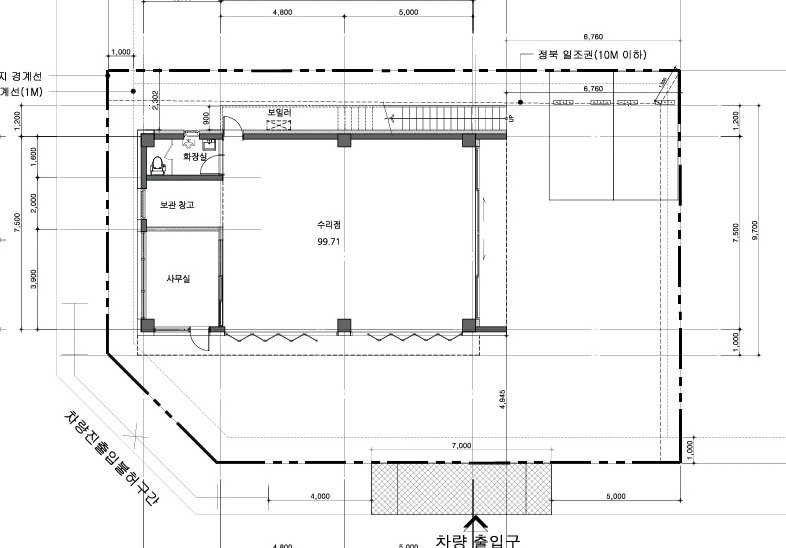
Once construction is involved, it becomes even more complicated.
The hardest part is that you don’t fully understand the process
until you’re already in it.
That’s exactly where I am right now.
Going back and forth with local authorities.
Waiting on permits.
Figuring things out step by step.
It’s slower than I expected.
More complicated than I planned.
But at the same time—it feels real.
Why I’m Still Doing This
There are easier ways to make a living.
Renting a space would be faster, safer, and less stressful.
But that’s not what I want.
I don’t just want to do good work.
I want to do it in a way that reflects how I think it should be done.
That’s why I’m building this.
What Comes Next
Right now, the shop doesn’t exist yet.
At least not physically.
It’s still a process—
a series of decisions slowly taking shape.
There are permits to go through.
A space to finalize.
And a lot of details to figure out.
I’ll be documenting all of it here.
Not just the finished result,
but everything in between—delays, mistakes, and small wins.
If you’re interested in small business, detailing,
or what it actually looks like to build something from scratch in Korea,
I’ll be sharing more along the way.
What made you want to build something of your own—or what’s holding you back?
If you’re interested in how car culture works in Korea,
you might find this useful:
→ Why Are There So Many Car Washes in Korea?