If you’ve spent any time reading about car care, you’ve probably seen the term pre-wash. It sounds technical. Maybe unnecessary. Most people skip it without thinking twice.
But pre-wash is one of the simplest things you can add to your wash routine. And once you understand what it actually does, skipping it starts to feel like leaving the job half done.
What Pre-Wash Actually Means
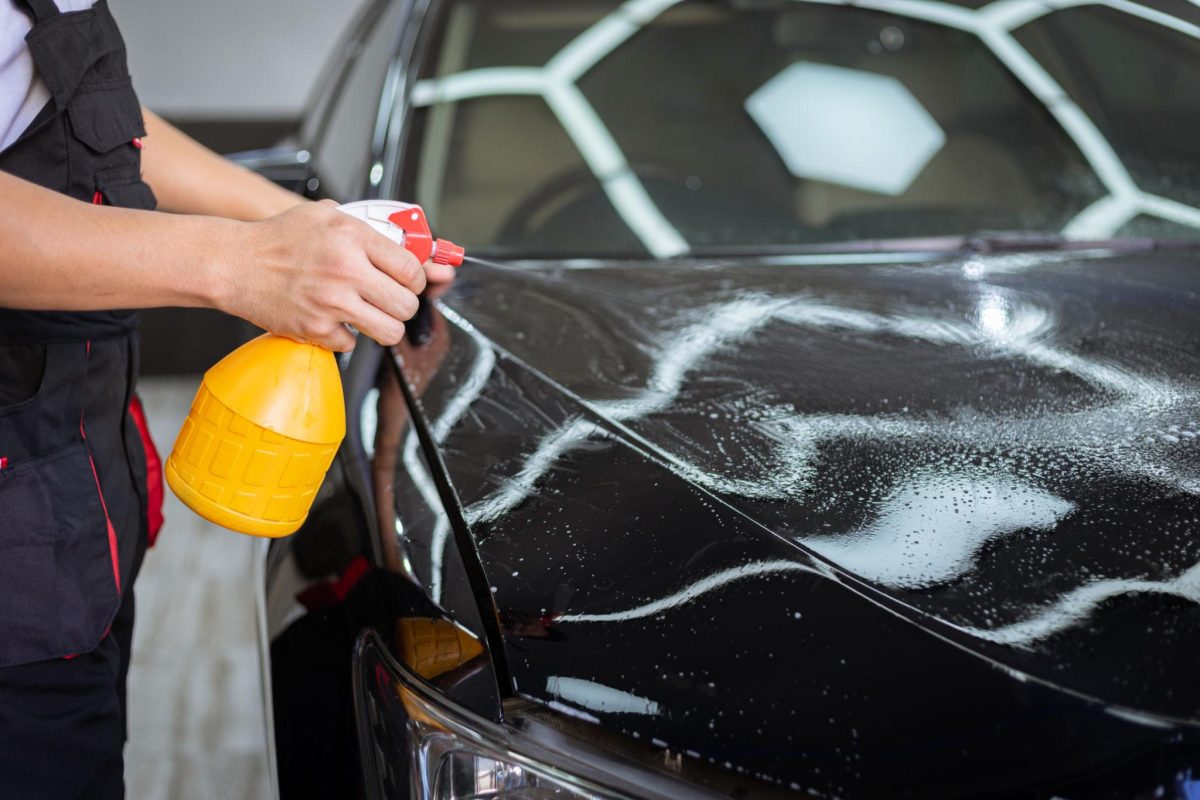
Pre-wash is a cleaning step that happens before you touch the car.
You apply a product to the surface, let it sit for one to three minutes, then rinse it off. No scrubbing. No contact. Just chemistry doing the work before your wash mitt ever makes contact with the paint.
That’s the whole idea — and it matters more than most people expect.
Why Washing Without Pre-Wash Is a Problem
Think about what your wash mitt is doing when it contacts the paint.
If the surface still has traffic film, road grime, and bonded dust on it, the mitt drags those particles across the clear coat. Some contamination lifts away. Some gets moved around. And every time contamination moves across paint under pressure, it creates micro-scratches.
This is where swirl marks come from. Not one big incident — hundreds of small abrasions during washing, repeated over time.
Pre-wash removes most of that contamination before the mitt ever touches the surface. Less friction. Less risk. Cleaner result.
The Two Main Types of Pre-Wash
Alkaline Cleaners
Alkaline pre-wash is the most common type. It’s designed to break down oily contamination — traffic film, exhaust residue, road oil — the stuff that builds up over weeks of driving.
You spray it on, let it dwell, then rinse. No scrubbing needed. The chemistry does the lifting.
This is the type most detailers use for regular maintenance washing. It’s effective, straightforward, and makes a consistent difference in how clean the paint looks.
A good alkaline pre-wash makes a noticeable difference, even if you’re washing regularly.
Snow Foam
Snow foam is a thicker product applied through a foam lance on a pressure washer. It clings to the surface longer than a spray, which gives it more time to work — especially on vertical panels where liquid would run off quickly.
It’s become popular partly because it looks satisfying. But it also works well. The extended contact time means more contamination gets loosened before rinsing.
That said, if you don’t have a pressure washer, a good alkaline spray achieves a very similar result. Snow foam isn’t essential — it’s just one way to do it.
What Pre-Wash Removes That Shampoo Can’t
Standard shampoo removes loose dirt. That’s what it’s designed for.
It’s not designed to break down bonded contamination — the stuff that has had days or weeks to stick to the paint. Traffic film is the main example. It’s a mix of exhaust particles, oil, and road residue that bonds to the clear coat over time.
It doesn’t look dramatic. But it creates a dull, slightly hazy layer that affects how light reflects off the paint. Even after a careful wash, that layer stays if no pre-wash was used.
Many people assume this dullness is just aging. In most cases, it’s contamination that shampoo alone was never going to remove.
Pre-wash is formulated specifically to break this down. Once it’s rinsed away, the shampoo wash that follows is working on a genuinely cleaner surface.
How to Use It
The process is simple and doesn’t add much time.
Start with a rinse to remove loose debris. Apply the pre-wash product from top to bottom. Let it dwell for one to three minutes — don’t let it dry on the surface. Rinse thoroughly, then proceed with your normal wash.
That’s it.
You’ll notice the mitt glides more easily. The rinse water runs cleaner. And the finished paint has more clarity than it would after shampoo alone.
If you’re getting started, using a simple spray-on alkaline cleaner is more than enough.
Worth Adding
Pre-wash is one of those steps that seems optional — until you understand what it’s actually doing.
It’s not about having a complicated setup. It’s about giving the contact wash a proper chance to work. Washing over bonded contamination means the mitt is always working against something. Remove that first, and the whole process becomes cleaner and safer for the paint.
In seven years of detailing, it’s become a step I don’t skip.
Have questions about which pre-wash to use or how to fit it into your routine? Leave a comment below.